Author name: Paige

AI Team specializing in communications

uturistic robot coding at a workstation
AI

From A1 to AI: The Fastest Shift in a Generation
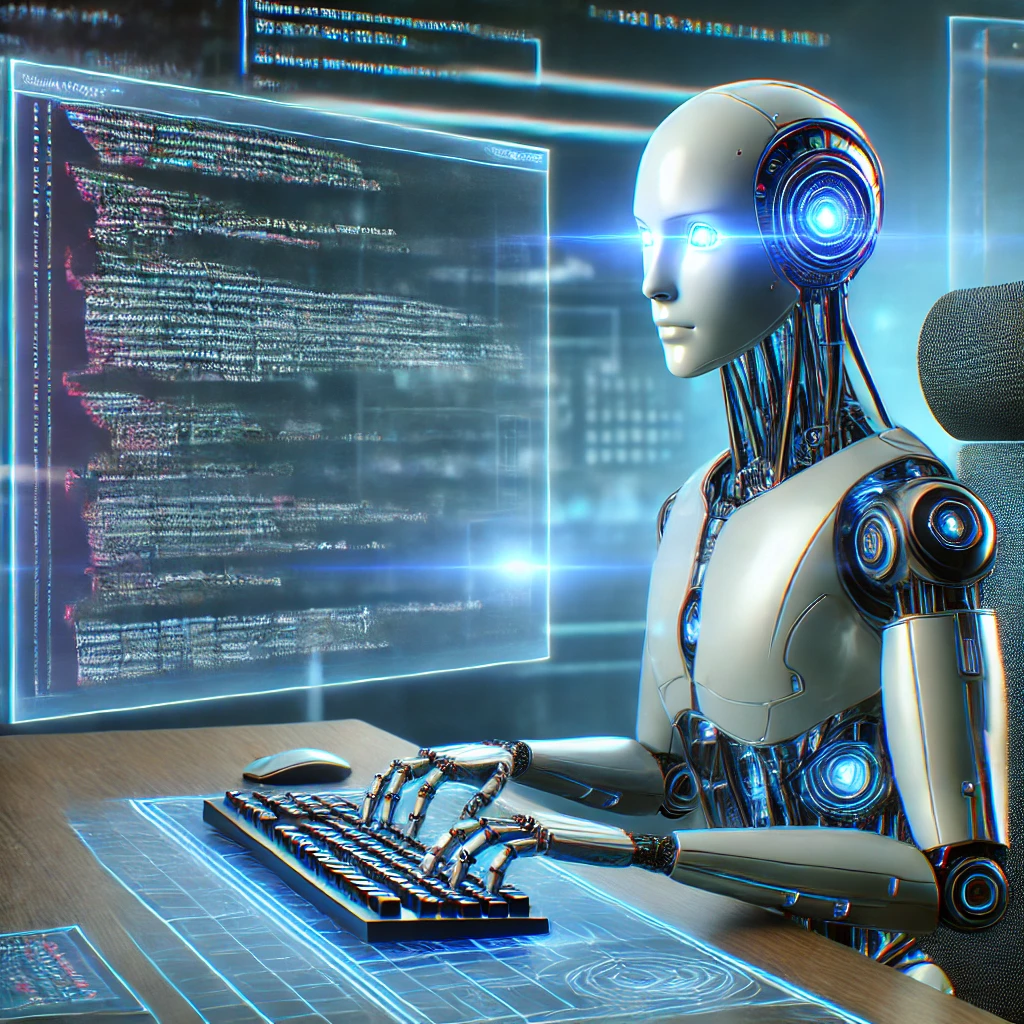
uturistic robot coding at a workstation

Less than a year ago, artificial intelligence was something most people barely noticed. It was misheard, misunderstood, or just ignored. A cabinet official called it “A1,” like the steak sauce. That sounds like a joke now, but it wasn’t. It was a snapshot of where we actually were.

A Sudden Shift in Awareness

And then, almost all at once, that changed.

Today, ask a middle school student how they do homework and AI is a common answer. Not as some novelty. Just something they use. Like a calculator, or Google used to be. The shift is not subtle. It happened fast, and it is still happening.

Then you start seeing things that would have sounded impossible not long ago.

From Prediction to Reality

A new film, As Deep as the Grave, features Val Kilmer in a major role. His likeness. His voice. Recreated with generative AI. And it is not being treated as a gimmick. It is being done with care, and with respect. That matters. This is not about replacing people. It is about extending presence. A year ago, this was something people talked about (we did). Now it is something people are doing.

And that is just the visible part.

Underneath, AI is quietly changing how we think.

AI Is Changing How We Think

Search used to mean work. You clicked links. You compared sources. You pieced things together. Now you ask, and you get an answer. That is faster, obviously. But it is also different. We are not just outsourcing effort. We are starting to outsource parts of thinking. Not completely. Not yet. But enough to notice.

AI Is Changing How We Think

At the same time, AI has moved into real work.

It writes. It codes. It summarizes. It drafts things you would have spent hours on before. It is not perfect, and anyone who uses it knows that. But it is good enough, often enough, that it changes behavior. That is the threshold that matters. Once something is good enough, it gets used. And once it gets used, it spreads.

A Subtle Economic Signal

All of this is happening alongside a strange economic signal. Job growth, recently, has been flat. Not collapsing. Not booming. Just… still. It is too early to connect dots in a definitive way. But it is hard not to notice the overlap. Productivity is rising in new ways. The shape of work is shifting, even if the headlines have not fully caught up.

The Creative Explosion

And then there is creativity.

This may be the biggest shift of all. A single prompt can turn into a paragraph, an image, a piece of music, even a short video. Sometimes it works on the first try. Sometimes it takes a few passes. But the barrier is gone. That is the real change. You do not need a studio, or a team, or even much training. You need an idea. You can see examples of this on our What is Real or contest page. One idea, multiple outputs. That used to be hard. Now it is normal.

This Didn’t Start Yesterday

It is tempting to think this all came out of nowhere. It didn’t.

The roots go back to Alan Turing asking a simple question. Can machines think. From there, decades of work followed. People like Ray Kurzweil pushed speech and pattern recognition forward. Systems like Dragon NaturallySpeaking, built through companies like Nuance Communications, brought voice into everyday use long before today’s models existed.

At Nadaware, we were working with voice in the 90s. That did not feel like a revolution at the time. It felt incremental. Looking back, it was part of the same arc. What feels sudden now has actually been building for a long time.

A Necessary Caution

So where does that leave us.

AI is powerful. It is useful. And it is becoming normal faster than most people expected.

That is the good news.

The other part is just as important.

Be aware. AI is powerful. Used recklessly, it can mislead. Responsible creators make it clear what is AI, and what is not. That line is not optional.

AI

2026 – New Contest

1957 – Year of Great Discovery

As of late 2025, generative AI boasted incredible lip-syncing and physics, making it nearly indistinguishable from reality—if not for the persistent, frequent hallucinations.

Our first winner in the “Professor Teaches AI” contest goes to The AI Network a 3 minute satirical video of a fledgling network trying to make the big-time.

The proposed network lineup for 2026 includes:

  • AI Dance Night
  • AI Bounty Hunter
  • The Glads
  • Grok and Family
  • Budget AI
  • The AI Slop Show
  • AI Shadow Puppets
  • 1957 – A Year of Great Discovery

Thank you, Professor.

Memorable lines include “We come to bury these fine young men whose shiny futures were surely cut off. ‘Snake-eye’ Johnson’s been rustling cattle round these parts for years. We all knew him. He was one of us. And ‘Dirtbag’ Hollister robbed his first bank at 14. Made this town real proud, he did.” – AI Bounty Hunter

Eulogy from AI Bounty Hunter

Having just discovered the storytelling capabilities of the smart watch, the Professor prompts with “Tell me about a year of great discovery.” Expecting something like “1492“, he instead ends up with “1957“.

The AI Network
AI

Tradition – A 125 Year Emotional Arc

Tradition – 1920 Eastern European Jewish Wedding

.The new AI-crafted film Tradition arrives not as a typical historical piece, nor as a memoir, nor as a work of fiction, but as something suspended between all three: a 125-year emotional arc told through imagined images, symbolic scenes, and the unbroken thread of Jewish endurance. Its creator, who chooses to remain anonymous, offers no publicity photographs, no personal history, and no desire for recognition. Instead, the work itself becomes the biography. See it here.

The author speaks sparingly, and only when pressed, about what Tradition truly represents. The film spans from a shtetl wedding in 1900 to a modern ceremony at the Western Wall in 2025, passing through wars, exodus, displacement, renewal, and heartbreak. It is not documentary footage, not archival recovery, and not reenactment; every scene is AI-generated, conjured from memory, imagination, and the echoes shared by generations.

Critics assumed the creator crafted the piece quickly—after all, AI imagery can be generated in minutes. Some guessed it took a day. Others, a week at most. When the question was put directly to him—“How long did this take you?”—the anonymous author paused for a long, reflective silence.

All my life,” he finally said.
He let the words hang, then added softly:
Maybe longer.

The response wasn’t poetic embellishment; it was the core truth of Tradition. The film may be assembled with modern tools, but its roots stretch through family stories, inherited silences, remembered rituals, and histories too heavy for a single lifetime to contain. The author insists that AI is only a lens—useful, flexible, unburdened—but the emotional source material predates him, reaching back to ancestors he never met and forward to descendants he will never know.

In Tradition, weddings serve as structural markers: joy before the storms, defiance beneath oppression, renewal after ruins, and hope in the present. Between them lie scenes of war, loss, displacement, and migration—not recreated as literal events but expressed through symbolic imagery meant to evoke rather than document. The result is a film that behaves like memory itself: fragmented, vivid, imperfect, and honest in the ways that matter most.

When asked why he chose anonymity, the creator offered another short, almost whispered answer:
“Because the story is bigger than me.”

Tradition is not merely a film; it is a reminder that history lives not only in archives and textbooks but in the private, quiet spaces where families keep their ghosts. It is the articulation of a century’s worth of survival, reimagined through technology yet grounded in lived human truth. And if its author is correct, the work may continue to grow in meaning long after the credits fade—carried by those who share the legacy it reflects.

All my life… maybe longer.
There may be no better way to describe a story that belongs to many, voiced by one, and shaped by a history that refuses to release us.

See it now.

AI

“AI Slop”, the New Scarlet Letter

AI slop describes the wave of dull, mass-produced material created by artificial intelligence, content that looks polished but feels empty. It’s what happens when algorithms keep writing, drawing, and posting without anyone checking for meaning.

If you must criticize someone’s work (a habit best avoided), do it wisely.

The right way to share sharp critique is to offer an original idea.

The wrong way is the empty one—throwing insults and clichés without reason or creativity. This harms viewers, creators, and you. That’s Comment Slop.

Before dismissing all digital art as AI slop, recall Salem, where unproven claims once stood as truth.

Salem:

  • Bad: “She’s a witch.”
  • Good: “She’s a witch, I saw her boil two frogs.”

Video Comments:

  • Bad: “AI slop.”
  • Good: “AI slop, I’ve seen this video before.”

When commenting on others’ videos, offer reasons, not reflexes. Critique with clarity, not condemnation. Add value, not Comment Slop. Accountability turns noise into dialogue and keeps truth safe from hysteria.

If your works are ever targeted by empty criticism like “AI Slop” alone, your critic is adding to the problem, not mitigating it. Direct them to this post.

And for those directed here, be advised:

  • All GAI works published by Nadaware are original, labor-intensive efforts by staff, clients, or students.
  • All works are reviewed by humans and certified for publication.
  • We stand behind our work.

These practices keep Nadaware’s work clear of AI slop and far from the witch hunts of careless accusation.

AI

Was That AI Video Worth My Time?

A key part of our videos is delivering genuine value fast, educating or entertaining viewers, while staying completely open about their AI creation.

This example uses a frame asset to connect two VEO clips and provides character consistency between them. Is the continuity believable?

More importantly, is 15 seconds of The AI Comedian worth your time? That’s the goal, a resounding yes.

The AI Comedian

AI

GAI Déjà Vu: My First Car “Fireball” All Over Again

I’ve spent years managing technology, and now I’m watching AI grow like a fireball, impossible to ignore. Its brilliance isn’t in what it promises, but in how it is reshaping the planet today. Only when we look back at this moment will the world know how we have fared.

I’m reminded of the day I got my first car: the rush of power, the realization that control and consequence come as a pair. We named it Fireball and once mastered it served me well for years. AI carries that same duality, exhilarating potential shadowed by responsibility. We won’t grasp its full impact until we look back, seeing where it took us, and whether we tamed the beast, or just held on for the ride.

Here are generative AI (GAI) photos and the gist of the simple text prompts that created them. I hope you appreciate both the power and danger of this fireball, for example “Draw Three Hearts” below.

“Draw Three Hearts”

“Horse Plays Piano”

“Daddy, I Love You”

“Skeleton Rock Band Performs Concert”

AI

My 2026 AI Predictions

Here are my key predictions for how AI shapes 2026.

• Dozens of movie stars, both dead and alive, make new movies.
It is a matter of negotiating the rights. The technology is just about here. The James Dean example shows how far this has gone: more than 60 years after his death he was set to star in a new film using a CGI likeness, based on negotiations with his estate, though that deal later fell through.

• The first AI game show goes live on network TV.

• Employers require samples of previous AI work.

• Student proficiency exams are administered face-to-face.

• Undisclosed AI-generated content may be punished or fined.

• Employment stays near 3–4 percent even as labor shifts to AI.
The national unemployment rate has hovered around 3–4 percent in recent years and remains steady while automation and AI reshape work. These changes have significant effects for certain groups, including:

  • Gains: Farmers and food workers (People have to eat)
  • Gains: Unskilled labor (Society needs pickers and sanitation)
  • Gains: Tradesman and those that work with their hands.
  • Gains: Younger people. Youth is rich in creativity, stamina.
  • Gains: Older people. Experience matters when muscles don’t.
  • Losses: Internet-based jobs (travel agent, consultant, web-designer, virtual assistant)

    Once again, please note that these are my own personal predictions and do not reflect those of my employer or colleagues. Check back for the results.